
Table of Contents
AI and online trust are colliding in 2026. See how AI-generated content, deepfakes and synthetic identities are reshaping what Canadians can believe online regarding AI and online trust.

The internet used to run on one assumption: if something looked real, it probably was. AI is breaking that assumption.
For years, the internet ran on one foundational assumption regarding AI and online trust: if something looked real, it probably was.
A photo showed what happened. A video recorded what someone actually said. A professional-looking corporate website earned your trust by default, directly impacting AI and online trust across networks.
AI is breaking that assumption.
Modern artificial intelligence can now generate hyper-realistic images, cloned voices, synthesized video and tailored written content fast enough that appearance alone is no longer a reliable test of authenticity, directly challenging AI and online trust across global networks.
And Canada is already responding to this seismic shift concerning AI and online trust.
On July 23, 2026, Innovation, Science and Economic Development Canada launched a public consultation on AI transparency—running through September 23—aimed at helping Canadians recognize when they are dealing with synthetic or AI-generated content (learn more via Canada.ca).
The question isn’t whether artificial intelligence will change the landscape of AI and online trust.
It already has.
At RytPik, we help businesses navigate this new reality—where appearance can no longer be blindly trusted and independent verification is the only reliable defense for AI and online trust. Here is what every Canadian business owner needs to know about AI and online trust in 2026.
Key Takeaways on AI and Online Trust
- Appearance is no longer proof: Hyper-realistic text, voice cloning, and deepfakes mean visual or auditory cues can easily be fabricated to disrupt AI and online trust.
- Canadian adoption is surging: Nearly 20% of Canadian businesses utilized AI for goods or services in early 2026, up sharply from previous years.
- Deception scales rapidly: Phishing attacks and social engineering campaigns are becoming personalized, highly convincing, and harder to spot.
- Trust requires a framework: Organizations must pivot from assuming safety based on appearance to enforcing rigorous verification protocols.
- Proactive defense is vital: Implementing strict identity controls and multi-channel verification protects companies from costly, AI-driven fraud.
Why “It Looks Legit” No Longer Holds Up
Creating convincing fake digital media used to require specialized technical skills, expensive studio software, and significant time.
AI has erased much of that barrier to entry.
A synthetic voice memo, a doctored product image, or a flawless professional-sounding phishing email can now be produced instantly and scaled across thousands of targets.
The core problem isn’t that AI-generated content is inherently malicious—in many corporate environments, it drives workflow productivity. The real challenge is that legitimate applications and deceptive threats can look remarkably similar.
What truly matters today is context: who created a piece of communication, why they created it, and whether it can be independently verified through alternative channels.
This digital evolution is not restricted to viral deepfakes or fake celebrity clips. Artificial intelligence is rapidly embedding itself into day-to-day Canadian commerce. According to recent economic data, 19.2% of Canadian businesses used AI to produce goods or deliver services in the year leading up to the second quarter of 2026, climbing significantly from 12.2% the year before and 6.1% the year prior.
As commercial adoption accelerates, critical operational questions arise concerning AI and online trust:
- Who actually authored or sent this message?
- Is this digital customer really who they claim to be?
- Did this urgent fund transfer request genuinely come from the executive suite?
- Is this vendor portal or website entirely legitimate?
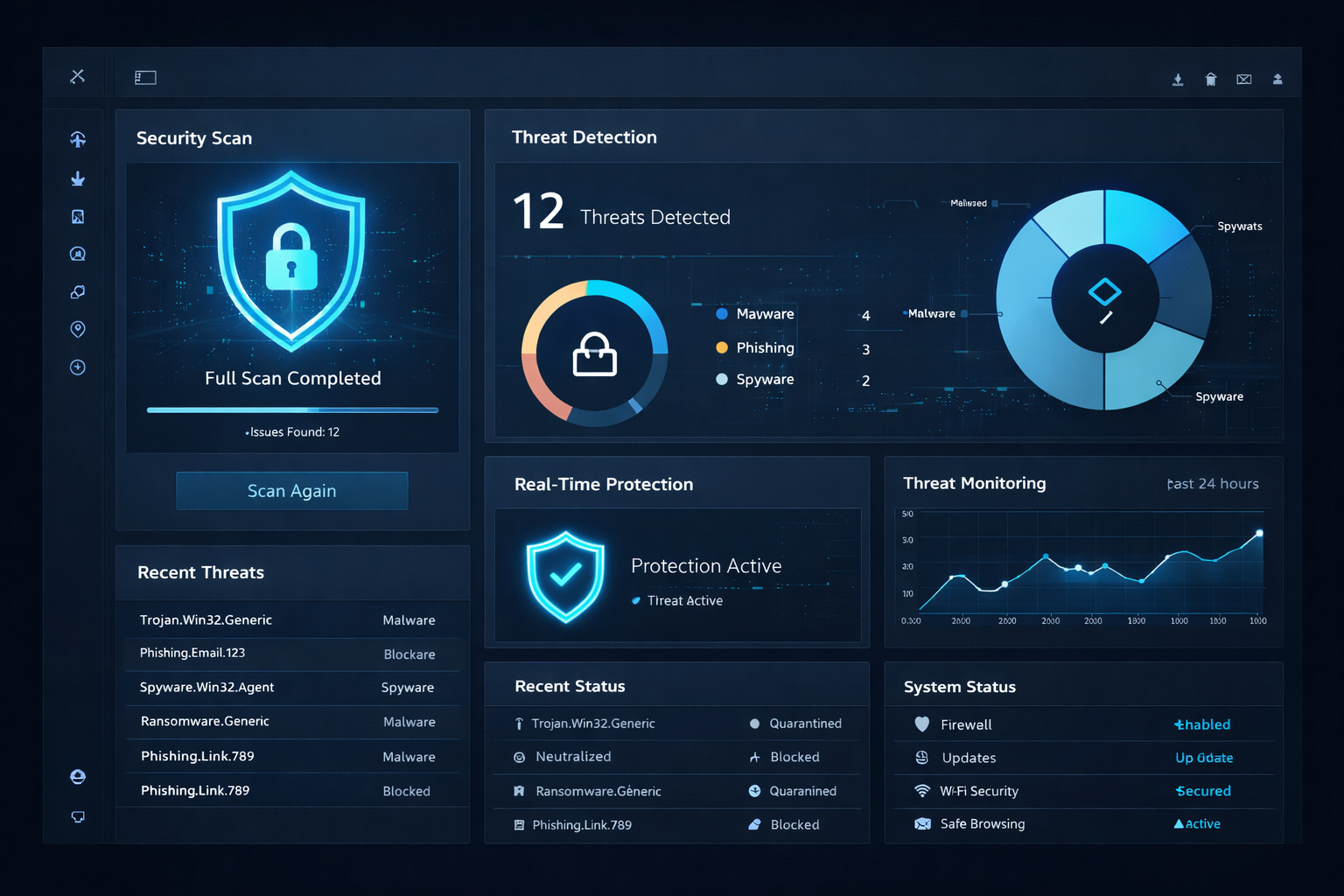
AI threats don’t always look like attacks. That’s why continuous monitoring and verification are essential.
The Problem With “It Looks Familiar”
Cybercrime and commercial fraud have always relied heavily on a false sense of familiarity.
A copied company logo. A cloned domain name. A professional-looking invoice format. A casual message that appears to come from a trusted colleague.
AI simply makes that deception easier to scale and infinitely harder to recognize.
A convincing voice pattern on a phone call is no longer concrete proof of identity.
A polished, high-end website layout does not guarantee legitimacy.
A live video feed can be manipulated or deepfaked in real-time, meaning presence on a screen is no longer absolute proof of who is on the other end.
Appearance can be copied. Independent verification is much harder to fake.
94% of surveyed Canadian business leaders are deeply concerned about AI-powered attacks, yet only 26% report having a comprehensive, tested response plan in place.
Read more about the growing threat landscape in our dedicated guide: AI Deepfakes and Scams: How to Verify What’s Real Online (2026) →
The New Rule: Verify Before You Trust
The appropriate response to this technological shift is not generalized paranoia or distrust of every digital interaction.
Instead, it requires becoming far more intentional about what earns your trust.
- Verify unusual requests independently: Always cross-check unexpected instructions before dispatching money or sharing confidential corporate assets.
- Inspect destination URLs carefully: Check where a link actually leads before entering login credentials or downloading attachments.
- Confirm secure web portals: Ensure you are navigating directly to legitimate corporate infrastructure rather than a typosquatted lookalike domain.
- Slow down under pressure: Artificial urgency is a primary psychological trigger used in modern social engineering scams.
- Establish secondary communication channels: Confirm financial changes, password resets, or high-level access requests via a pre-verified phone number or secure out-of-band channel.
The more consequential the operational decision, the stricter and more rigorous your verification standard must be.
What This Means for Businesses and Modern Security
For modern enterprises, this transition extends far beyond avoiding misleading social media posts or manipulated online media.
A convincing, AI-engineered message can alter supply chain payments. A synthetic voice clone can mimic a Chief Executive Officer. A fraudulent web portal can capture enterprise credentials in seconds. A manipulated document can pass inspection as a genuine contract from a long-standing partner.
This fundamentally changes what corporate cybersecurity must cover.
Cybersecurity is no longer solely about keeping unauthorized hackers out of firewalls or databases.
It is increasingly about protecting identity, executive decisions, and organizational trust.
That strategic shift is precisely where RytPik steps in to help.
RytPik assists small and growing businesses in hardening access controls, elevating employee security awareness, and embedding robust verification workflows so that sophisticated digital deception cannot turn into an expensive operational disaster.
Because the defining question for modern leadership is no longer just:
“Can we stop an intruder from hacking our network?”
It is also:
“Can we definitively tell when someone isn’t who they claim to be?”
AI can create almost anything. That makes knowing what to trust more valuable than ever.
For businesses, that means building security around verification rather than assumption — because the next threat may not look suspicious at all.

Don’t trust the appearance. Verify the source.
Frequently Asked Questions
Q: Is AI making the internet fundamentally less trustworthy?
Not inherently. However, AI makes generating convincing synthetic media effortless, meaning visual or auditory appearance alone is no longer an infallible benchmark of truth.
Q: How can I tell if online media or text was created by AI?
There is no single visual test that works universally. Always evaluate the publisher’s track record, cross-reference claims with independent sources, check links thoroughly, and avoid making high-stakes decisions based entirely on unverified digital assets. Read our full guide on AI deepfakes and scams →
Q: Should small businesses actively worry about AI-driven fraud?
Yes. AI allows attackers to scale targeted spear-phishing and corporate impersonation cost-effectively. Companies should pair continuous employee awareness training with multi-factor authentication, granular access controls, and strict verification protocols. Read about common cybersecurity mistakes →
Q: What is the most effective way to protect a business from AI deception?
Mandate independent verification channels for high-risk actions, including financial wire transfers, credential modifications, and sensitive data requests, backed by enterprise-grade security oversight. Learn more about email and inbox security →
Get Protected With RytPik
The businesses best positioned to withstand modern cyber threats aren’t necessarily those with the largest technology budgets. They are the organizations that comprehensively understand their risk exposure and fix vulnerabilities before malicious actors find them.
Don’t trust the appearance. Verify the source.
RytPik — Helping Businesses Grow with Confidence Through Enterprise-Grade Cybersecurity.
Explore more RytPik resources: