
When we talk about human error in cybersecurity, the immediate reaction is often to ask who clicked the wrong link. But the reality is more complex. Modern cyberattacks aren’t always successful because employees are careless. They don’t have to be reckless for a business to be compromised — they simply have to encounter an attack convincing enough to exploit their normal routines.
Cybercriminals understand that staff are busy, receiving dozens of emails daily from customers, suppliers and managers. A familiar-looking message arriving at the right moment can convince even a cautious employee to act before thinking twice. That is why addressing human error in cybersecurity has become one of the most urgent priorities for businesses in 2026.
At RytPik, we help businesses build security systems that don’t require perfect employees. Here are five reasons good employees get hacked — and exactly how to stop it.
Your employees aren’t the enemy — they’re targets. Human error in cybersecurity is the #1 threat.
Table of Contents
1. Falling for AI-Generated Phishing Emails
Phishing has always been a problem, but AI has made it nearly impossible to spot. Attackers now use artificial intelligence to craft emails that perfectly mimic writing styles, reference real projects, and arrive at the exact moment they are most likely to succeed. The most dangerous element of human error in cybersecurity is that it can happen to anyone — even the most careful employees.
The fix: Train employees to verify requests through a second channel. Never rely on email alone for payment instructions or sensitive information. Deploy advanced email filtering that uses AI to detect AI-generated threats. Read our guide on AI deepfakes and scams →
2. Reusing Passwords Across Accounts
Password reuse is one of the most common forms of human error in cybersecurity. When an employee uses the same password for multiple accounts, a single breach can expose everything — email, banking, customer data, and internal systems. Attackers know this and actively test stolen credentials across thousands of platforms.
The fix: Enforce unique, complex passwords for every account. Implement a password manager so employees don’t have to remember them all. Turn on Multi-Factor Authentication (MFA) everywhere — no exceptions.
86% of SMBs encountered at least one cybersecurity incident in the past year. Human error in cybersecurity is the leading cause.
3. Ignoring Software Updates
Every time an employee clicks “remind me later” on a software update, they are potentially leaving a known vulnerability open. Attackers actively scan for unpatched systems. In 2025, 56% of tracked vulnerabilities were exploited without any login needed — attackers simply found unpatched software and walked straight in.
The fix: Enable automatic updates on all devices and applications. If automatic updates aren’t available, schedule regular maintenance windows. Don’t let convenience become an entry point for attackers.
4. Using Insecure Devices and Networks
Remote work has expanded the attack surface dramatically. Employees working from home, coffee shops, or co-working spaces often connect to unsecured Wi-Fi networks. Personal devices may lack essential security updates, antivirus software, or company-mandated policies. This creates a dangerous gap where human error in cybersecurity intersects with technology.
The fix: Require endpoint protection on all devices. Use a VPN for remote connections. Consider moving to Zero Trust Network Access (ZTNA) instead of traditional VPNs, which grant broad, network-wide access. Read our guide on securing remote teams →
Human error in cybersecurity is not about blame — it’s about building resilient systems.
5. Falling for Business Email Compromise (BEC)
Business Email Compromise (BEC) is one of the most financially damaging forms of human error in cybersecurity. Attackers impersonate executives, suppliers, or trusted partners to manipulate employees into sending payments or sensitive data. These attacks rely on trust and urgency — not technical hacking.
The fix: Implement a strict verification process for any financial request. Require dual approvals for wire transfers. Train employees to recognize the signs of BEC — urgency, unusual payment requests, and slight variations in email addresses. Read about business email protection →
How Human Error in Cybersecurity Impacts Businesses
Human error in cybersecurity is not about blaming employees — it is about understanding how attackers exploit everyday actions. When an employee clicks a convincing link or enters credentials into a fake login page, the attacker gains legitimate access without needing to break through technical defenses.
According to research guidelines by CISA’s cybersecurity best practices, organizations that implement layered defenses are far better equipped to reduce the impact of human error. The average cost of a data breach for an SMB is $220,000. For many businesses, that is more than their annual profit.
Following the five steps above — and working with a cybersecurity partner like RytPik — can dramatically reduce your risk.
Read more about common security gaps →
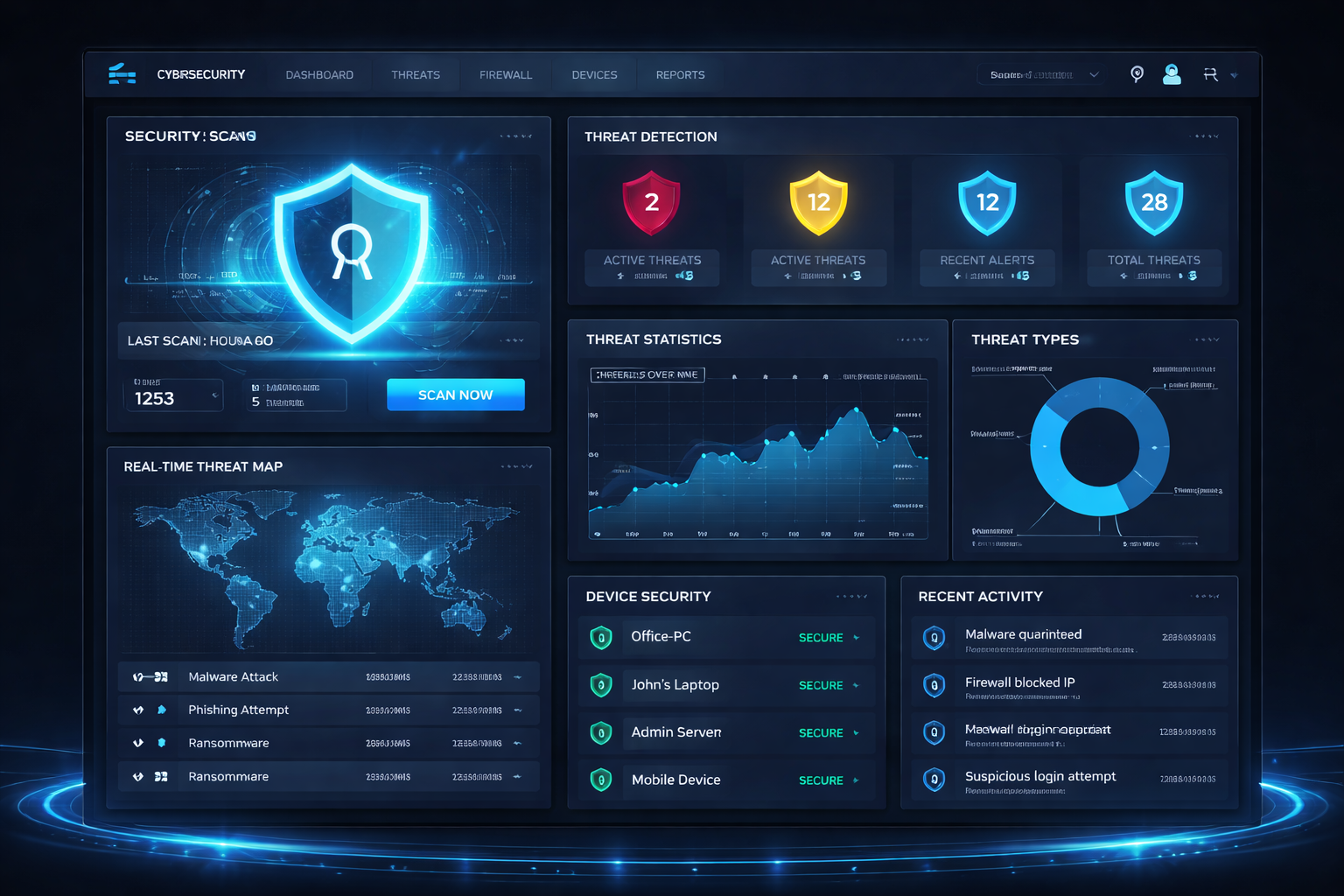
Continuous monitoring helps you spot unusual activity before it becomes a crisis.
Why RytPik?
RytPik designs practical cybersecurity frameworks around how your team actually works, helping ensure one wrong click doesn’t become a business-wide crisis.
- Authentication & Access Audits: Identify unnecessary access and strengthen authentication policies.
- Employee Security Coaching: Practical, real-world awareness training that empowers staff instead of blaming them.
- Email & Endpoint Defense: Strengthen the systems employees use every day and help intercept suspicious activity before it becomes a larger problem.
The objective is simple:
Your employees shouldn’t have to be perfect for your business to be secure.
Your employees shouldn’t have to be perfect for your business to be secure.
Build systems that protect your team — not systems that blame them.
Frequently Asked Questions
Q: What is human error in cybersecurity?
Human error in cybersecurity refers to mistakes employees make that can lead to security breaches — such as clicking phishing links, reusing passwords, or falling for social engineering scams. It is the leading cause of cyber incidents in small businesses.
Q: How can I reduce human error in cybersecurity?
Reduce human error by implementing MFA, providing regular security training, enforcing strong password policies, and deploying automated email filtering and endpoint protection. Read more about remote employee security risks →
Q: What should an employee do after clicking a suspicious link?
Report it immediately. Employees should not hide the mistake or wait to see what happens. Fast reporting allows the business to secure accounts, revoke sessions and investigate potential exposure.
Q: Can RytPik help protect my business from human error?
Yes. RytPik identifies vulnerabilities in authentication, access controls and everyday workflows, then helps businesses build practical defenses that remain effective even when employees encounter sophisticated attacks. Read about how email compromise targets businesses →
Get Protected With RytPik
The businesses best prepared for cyber threats are not necessarily those with the biggest technology budgets. They are the businesses that understand their exposure and address weaknesses before attackers discover them.
Find the gaps before attackers do.
RytPik — Helping Businesses Grow with Confidence Through Enterprise-Grade Cybersecurity.
Explore more RytPik resources:



[…] numbers later eased, but the underlying lesson remains: attackers follow convenience. Our guide on human error in cybersecurity explores how these ordinary decisions become the entry […]
[…] The Canadian Centre for Cyber Security’s National Cyber Threat Assessment 2025–2026 calls cybercrime a persistent threat to organizations across Canada and warns that criminals are using artificial intelligence to sharpen their methods. The clumsy typos that once gave scams away are disappearing — which is precisely how this differs from traditional human error in cybersecurity. […]
[…] distinction is closely tied to the same habits that prevent human error in cybersecurity from becoming a recurring incident — including how credentials are managed and how access is […]
[…] Q: What should a small business check before choosing a cloud provider?Confirm where information is stored and processed, who can access it, how it is protected, how incidents are handled, and whether your data can be retrieved and deleted when the relationship ends. Read about human error in cybersecurity → […]