
Third-party cybersecurity risk is the doorway many businesses never see. Your passwords may be strong. Your team may use multi-factor authentication. Your devices may be protected, and your backups may be tested.
And yet, the most important doorway into your business may belong to someone else.
It could be a payroll provider. A cloud platform. An accounting firm. A marketing agency. A software company. Even a small supplier with access to one shared system.
This is the part of cybersecurity many business owners never see: your exposure does not end where your network ends.
You are not only responsible for securing your business. You are exposed to the security of every business connected to it.
Table of Contents
Your exposure does not end where your network ends.
The Weak Point May No Longer Be Inside Your Company
Modern businesses are built on connections.
Payments run through outside platforms. Documents live in cloud systems. Accounting depends on software providers. Marketing agencies manage accounts. Vendors exchange files, credentials and sensitive information.
Every connection creates value. It can also create exposure.
Canadian research illustrates how significant that exposure has become. QBE Canada’s 2026 research found that 65% of Canadian businesses that experienced a cyber event in the previous year said at least one attack involved a supplier, up from 58% the year before.
The World Economic Forum’s Global Cybersecurity Outlook 2026 and Canada’s National Cyber Threat Assessment 2025–2026 similarly identify supply-chain and third-party compromise as significant cybersecurity concerns.
The lesson is straightforward:
An attacker does not always need to break through your security if they can enter through someone you already trust.
For a deeper look at how attackers bypass traditional defenses, read our guide on human error in cybersecurity — the attack vector AI exploits best.
When a Vendor Is Breached, Your Business Still Feels the Impact
Picture an accounting firm storing sensitive client documents through an outside cloud provider.
The firm’s own systems are secure. Its employees use strong authentication. Its internal controls are sound.
Then the provider is compromised.
Suddenly, information the accounting firm carefully protected is caught inside an incident it did not create.
That is the uncomfortable reality of third-party risk. Your security controls may stop at your perimeter, but the consequences of a vendor incident can travel much further.
Under PIPEDA, organizations generally remain responsible for personal information they transfer to third parties for processing. The Office of the Privacy Commissioner has also been developing guidance around assessing third-party service providers before entrusting them with personal information.
For businesses handling sensitive client or customer data, vendor security is no longer simply a procurement consideration.
It is part of the security architecture.
You can secure your front door while someone else holds a key.

A vendor incident can travel far beyond the vendor’s own walls.
Six Questions Worth Asking Before Granting Access
Before allowing an outside company into your systems, ask:
What Information Can This Provider Access?
Map every data category the vendor can see, store, or transmit.
Does It Genuinely Need That Level of Access?
Least-privilege access should apply to vendors, not just employees.
Who Inside the Vendor Can Reach Our Information?
Insider risk at the vendor is still risk to your business.
What Happens If the Vendor Is Compromised?
Know the incident response expectations before the incident happens.
How Quickly Will We Be Notified?
Notification timelines should be defined, not assumed.
Can Access Be Removed Immediately When the Relationship Ends?
Offboarding should be fast, complete, and verifiable.
These questions may sound operational.
They are cybersecurity questions.
Five Ways to Reduce Third-Party Cybersecurity Risk
1. Know Who Has Access
Maintain a current record of every outside company connected to your systems, accounts or sensitive information. Unknown access is unmanaged exposure.
2. Give Vendors Only What They Need
A provider that needs access to one application should not have broad access across the business.
3. Review Vendors Over Time
A company that was secure when you signed the contract may later change its technology, ownership, employees or subcontractors. Vendor risk should be reviewed, not assumed. Our guide on business cybersecurity risk in 2026 walks through the wider threat landscape.
4. Remove Access When Relationships End
Offboarding should include accounts, credentials, integrations, shared folders and connected applications — not simply the termination of a contract.
5. Prepare for a Vendor Breach
Know which business operations depend on outside providers and what happens if one suddenly becomes unavailable.
Continuous monitoring is the thread that ties all five priorities together. Read our guide on closing the monitoring gap with 24/7 network security →
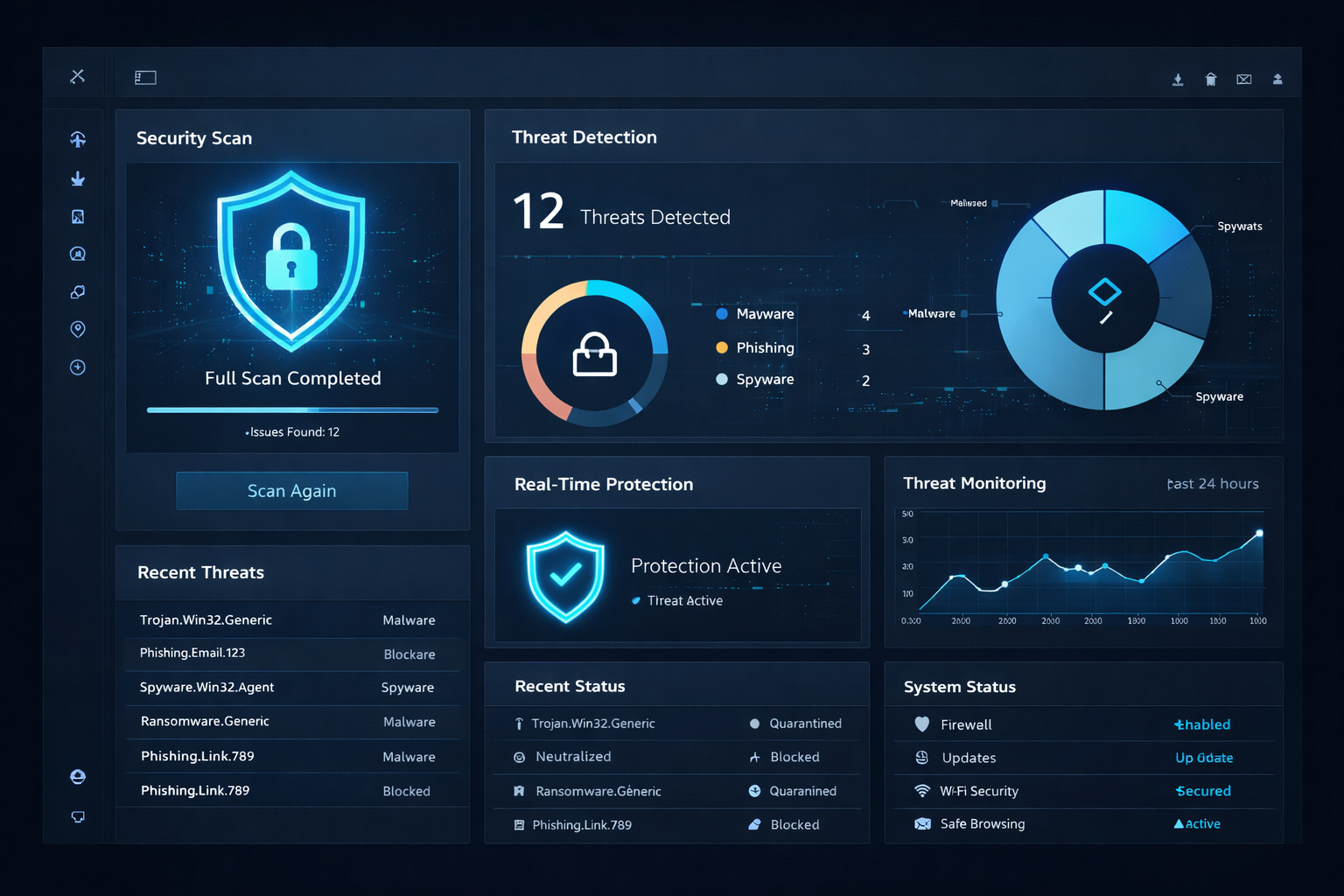
Continuous monitoring keeps third-party exposure visible.
How RytPik Closes the Gap
At RytPik, cybersecurity is viewed beyond the walls of your business.
We help businesses identify the vendors, platforms and external connections that influence their security posture — then look for unnecessary access, weak points and dependencies that could become costly during an incident.
Because modern cybersecurity is not simply about protecting what you own.
It is about understanding everything your business depends on.
Third-party risk assessments should not wait for a breach to become a priority.
Cybersecurity does not stop at the edge of your network.
Know who you trust. Know what they can access. And make sure your security does not end where theirs begins.

Strategic third-party risk review aligned with your business objectives.
Frequently Asked Questions
Q: What is third-party cybersecurity risk?
Third-party cybersecurity risk is the possibility that a vendor, supplier, software provider or outside partner could expose your business through its systems, access, employees or services. Read our guide on business cybersecurity risk in 2026 →
Q: How can a small business reduce vendor risk?
Start by identifying which vendors can access important systems or information. Limit their permissions, review access regularly and remove it when the relationship ends. Read about 5 cybersecurity mistakes small businesses make →
Q: What should I ask a vendor about cybersecurity?
Ask what information it can access, who can reach that information, how security incidents are handled, how quickly you would be notified of a breach and how access is removed when the relationship ends. For the wider threat picture, see CISA’s Four Cybersecurity Essentials for Businesses.
Q: Am I responsible if my vendor is breached?
Potentially. Under PIPEDA, organizations generally remain responsible for personal information they transfer to a third party for processing. The specific privacy obligations depend on the organization, industry and applicable provincial or federal legislation. Explore how human error in cybersecurity plays a role →
Q: Does third-party cybersecurity risk affect cyber insurance?
Yes. Cyber insurance requirements increasingly ask how vendors and third-party providers are assessed. Read our guide on 2026 cyber insurance requirements →
Secure Your Business Beyond Your Walls
Modern cybersecurity is a shared responsibility between your business and every provider you trust with access.
Understanding your third-party cybersecurity risk is the first step toward closing the doorway you did not know was open.
RytPik — Advanced Cybersecurity. Trusted Protection. Business Confidence.
Explore more RytPik resources: