
Business email compromise in Canada is the quietest kind of cybercrime — the hack that doesn’t look like a hack. It’s 4:47 on a Friday, and the office manager at a Mississauga accounting firm wants to clear her desk. An email arrives from the managing partner. It has his name, his signature, and the slightly rushed tone he uses between client meetings. A supplier has changed banks, he writes. Could she update the payment details before the weekend?
She does. Nothing flashes red. There’s no antivirus alert, no ransom note, no locked screen. The money simply leaves, politely and on time.
Illustrative scenario, not a specific client.
Table of Contents
The quietest cybercrime leaves no alert behind.
The Attack With Nothing to Detect
Business email compromise (BEC) is the quietest kind of cybercrime because there’s almost nothing to flag. Attackers rarely “break in.” They walk in with a phished password, a reused login, or a lookalike domain that differs by one letter. Then they watch. They learn who approves payments, how invoices are worded, and when the boss travels.
When they strike, the request looks like routine business because it was built from your routine. This is the pattern behind almost every business email compromise in Canada incident — and it’s why antivirus software never sees it coming. Our guide on business cybersecurity risk in 2026 explains why the attacker rarely needs to break in — they just need to log in.
$67.9 million
reported Canadian losses to spear phishing in 2025, across 813 reports. Total reported fraud losses that year topped $704 million — and the Competition Bureau notes only 5% to 10% of frauds are ever reported.
Source: Canadian Anti-Fraud Centre, 2025

The request looks routine because it was built from your routine.
Why Small Firms Feel It Most
Dental practices, law offices, and accounting firms hold two things criminals love: money in motion and clients who trust them. They also rarely have a security team. Often one busy employee is the only control standing between a convincing email and a wire transfer — which is exactly the gap that makes business email compromise in Canada so effective against smaller firms.
The Canadian Centre for Cyber Security’s National Cyber Threat Assessment 2025–2026 calls cybercrime a persistent threat to organizations across Canada and warns that criminals are using artificial intelligence to sharpen their methods. The clumsy typos that once gave scams away are disappearing — which is precisely how this differs from traditional human error in cybersecurity.
What Actually Stops It
The defences against business email compromise in Canada are unglamorous, and they work because they don’t depend on anyone spotting a perfect fake:
Call Back Before Changing Banking Details
Use a number you already have — never the one in the email.
Require Two Approvers
Any payment above a set amount should need two sets of eyes.
Turn on Multi-Factor Authentication
For every email account, with passkeys where possible.
Watch for New Inbox Forwarding Rules
A favourite attacker trick for staying hidden inside a hijacked account.
Report Every Incident
Notify the Canadian Anti-Fraud Centre and local police — even when the loss is small.
Give People Permission to Pause
Train employees to question urgency — and reward it when they do.
For plain-language guidance your whole team can follow, Get Cyber Safe is a good place to start.
The firm in our opening story did nothing careless. Her instincts were to be helpful, quick, and loyal, and those are exactly the instincts attackers rely on. Good security gives people permission to pause — and that is what makes it one of the most reliable defences against business email compromise in Canada.
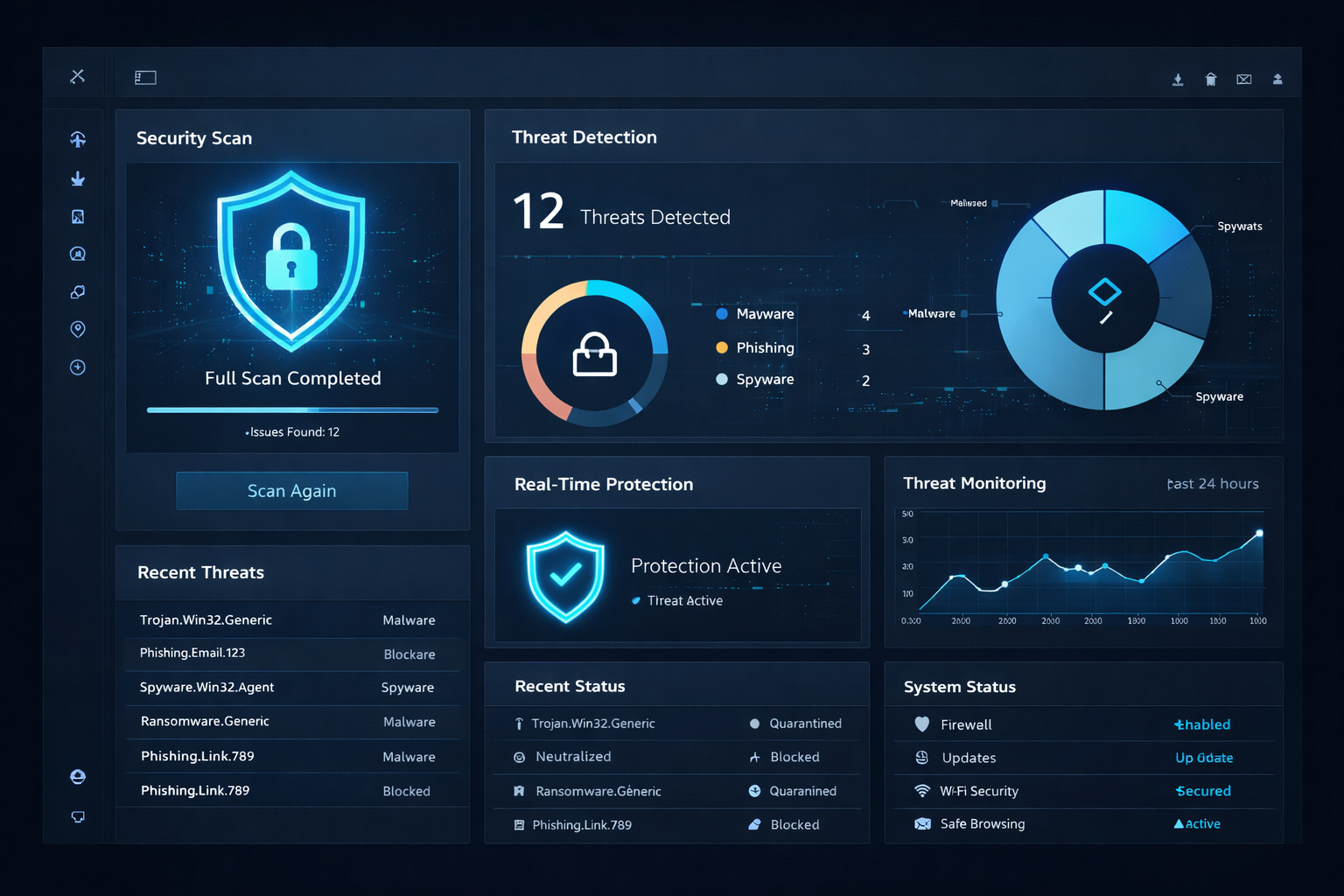
Continuous monitoring detects the forwarding rules attackers leave behind.
Where RytPik Comes In
At RytPik, we look at how money actually moves inside your business — the emails, the approvals, the moments where one busy person becomes the only control. That is where real defences against business email compromise in Canada begin.
We map where a trusted-looking request could redirect a payment, show owners what to tighten first, and give teams a workflow that lets them pause without slowing down.
Because the strongest protection against BEC is not a filter. It is a habit — verified twice, paid once.
Related reading: 2026 cyber insurance requirements every small business must have before renewal →
Not sure where your firm’s payment process would break?

A payment workflow that lets people pause without slowing down.
Frequently Asked Questions
Q: What is business email compromise in Canada?
BEC is a scam in which criminals impersonate a trusted person, such as an executive, supplier, or lawyer, to redirect payments or steal information. It usually involves no malware. Read our guide on business cybersecurity risk in 2026 →
Q: Why doesn’t antivirus catch business email compromise in Canada?
Because there’s nothing malicious to scan. The email is plain text from a real or convincingly spoofed account, and the “payload” is a request your employee carries out themselves. Explore how human error in cybersecurity plays a role →
Q: What should we do if we’ve sent money to a fraudster?
Contact your bank immediately and ask about a recall. Then report to the Canadian Anti-Fraud Centre and your local police. Speed matters. For a trusted baseline, see Get Cyber Safe →
Q: How does AI make business email compromise in Canada more dangerous?
The Canadian Centre for Cyber Security warns that AI is sharpening criminal methods — reducing the typos and awkward phrasing that once gave scams away. Read the National Cyber Threat Assessment 2025–2026 →
Q: Does BEC affect cyber insurance eligibility?
Yes. Insurers increasingly require documented payment-verification and MFA policies before underwriting coverage. Read our guide on 2026 cyber insurance requirements →
Q: Where can Canadian businesses find support after a BEC incident?
The Canadian Anti-Fraud Centre and local police are the primary reporting channels. Read about 5 cybersecurity mistakes small businesses make →
The Hack That Never Announces Itself
Business email compromise in Canada rarely leaves a mark. It leaves an apology, a wire recall, and a team that did everything right — except pause for sixty seconds.
The businesses best prepared for BEC are the ones where verification is a habit, not an obstacle.
Verified twice. Paid once.
RytPik — Advanced Cybersecurity. Trusted Protection. Business Confidence.
Explore more RytPik resources: